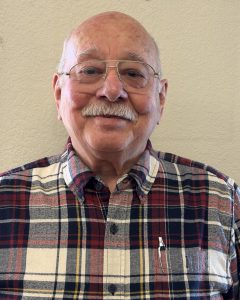
The road to retirement led through a southern military college, steel mill, and a comedy group in San Francisco. Then there was poetry while unemployed. It all reflected what was or wasn’t happening during a nine-year journey through college. But the three years as a freshman were the most memorable. There was little to indicate the journey to follow.
The journey began with a high crime police department while working on a master’s in criminology from U.C. Berkeley. This brought a confrontation with the fact that the study of crime has little to do with the policing of it.
This was followed by a Masters and Doctorate from University of Southern California. The next stop was a career as a professor at Sacramento State. While teaching was great, it often reflected a world of categories and logic. Reflecting a different view caused a return to police work and being a “street cop” (one day a week). From this experience came “The Custer Syndrome,” a view of cops dealing with a hostile public. This was preceded by a journal article regarding public perceptions of police.
During this time street gangs emerged as a social problem and a new interest emerged. As with life, one thing led to another. From street gangs to motorcycle groups to prison gangs. This later involved both court testimony analyzing criminal cases and The Asphalt Nations, a reference book on California gangs.
Later came “Wolves among Sheep (the Emergence of Russian Gangs),” for Gang Beat, a journal by the California District Attorneys Association. Later efforts moved to involvement with police in the Peoples Republic of China, and a new emphasis on Pacific Rim Crime.
Thammasat University in Bangkok was the next stop. One major project involved the DEA and American Embassy in narcotics training for the Royal Thai Police. Later there was a co-authorship on a study of “Human Rights: Implications for Police Officials,” University Foundation of Thailand, and Royal Thai police. (The military took over the government shortly after.)
Following the travel, there was a co-chairmanship of an international conference on Pacific Rim Crime in San Francisco. The Pacific Rim included drug cartels. This was followed by the co-authorship of a screenplay titled The Black Rose, about a women becoming the head of a drug cartel. (It didn’t go anywhere, but it was fun to write.)
Current efforts involve developing fifty years of notes and reports into a view of crime from the streets. In many ways it’s like setting an arrest warrant to music. A new challenge for an old mind.